
You stand in your kitchen. The cabinets hang crooked. The layout fights you every morning. You have decided to renovate.
Now comes the choice that shapes everything. Do you hire an architect first, then hunt for contractors? Or trust one team to handle it all?
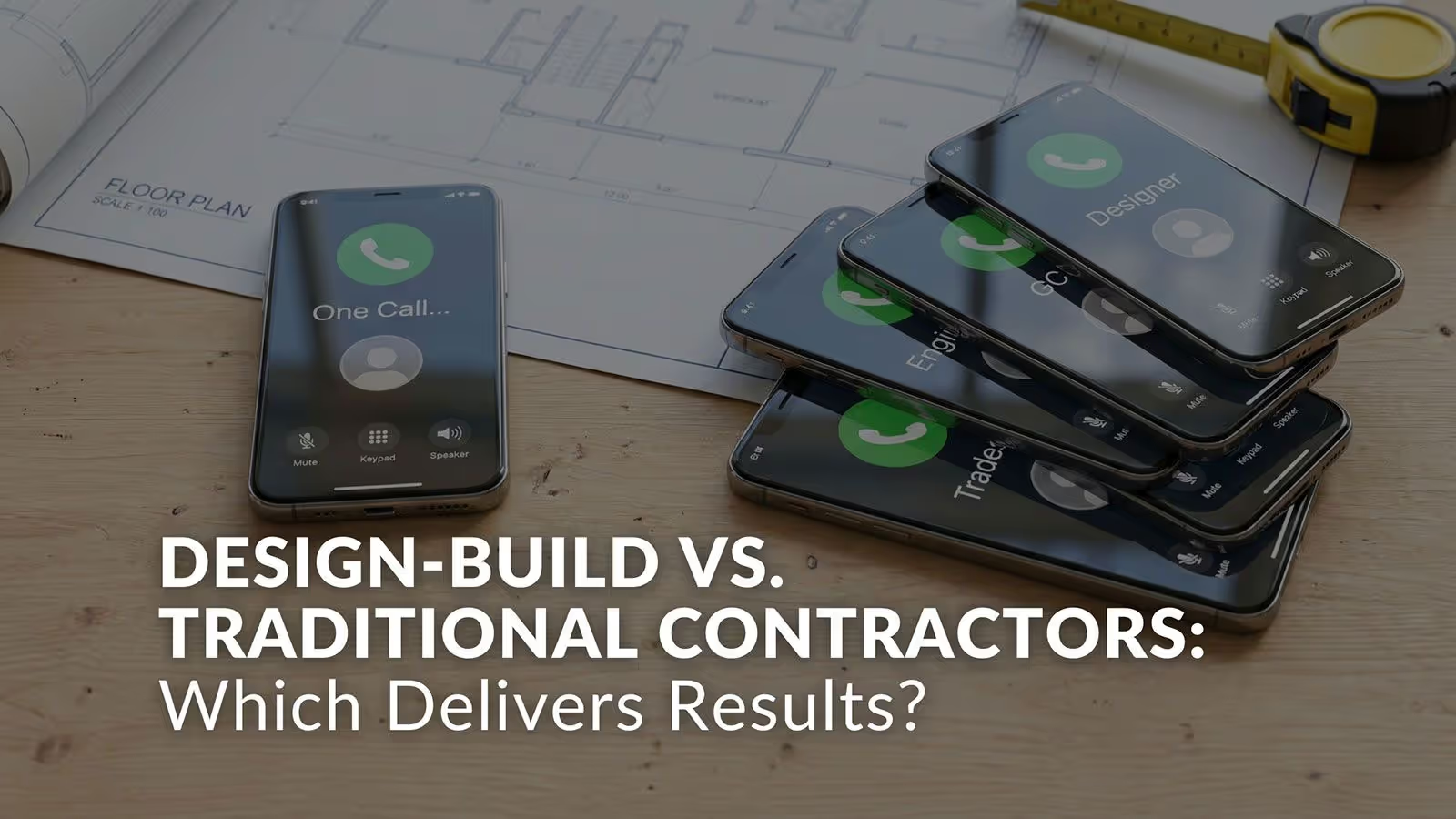
The method you pick determines who suffers when surprises hit. And surprises always hit. This guide breaks down design build vs traditional contractors where it matters: your timeline, your budget, and your sanity.
By the end, you will know which approach protects you-and why an integrated method is winning over Ontario homeowners who have learned the hard way.
Before you start your renovation, get the guide that helps you avoid the delays, stress, and costly mistakes that derail projects.
Download My Free Guide Now
Design-Build vs Traditional: Quick Renovation Comparison
- Design-build = one team, one contract → fewer headaches, fewer “that’s not my problem” moments, smoother timeline.
- Traditional = designer + contractor separate → easier to bid-shop, but more hands-on for you, more coordination, and more chances for delays/changes.
- Rule of thumb: If you want simplicity and accountability, pick design-build. If you want maximum bid competition and don’t mind managing the process, go traditional.
The Trap of Traditional Remodeling
The old way feels safe. Hire a designer. Draw plans. Bid to contractors. It has worked for decades.But safety is an illusion.
You pay for months of design work before you know if your dream matches your budget. Then the bids arrive. Sticker shock. Back to the drawing board. More fees. More delays.
You become the messenger. The contractor finds a problem the designer missed. The designer blames the site survey. You pay for the argument.
This is the traditional design-bid-build trap. Two contracts. Two teams. One you in the middle, translating, mediating, bleeding money and time.
In the second quarter of 2025, Statistics Canada’s Residential Renovation Price Index shows that renovation costs rose by 0.9% nationwide, with prices increasing in all 15 census metropolitan areas, including Hamilton and London. Every delay stings more now.
How Design-Build Changes Everything
Design-build is not a tweak. It is a different game.
One contract. One team. One throat to choke when things go sideways.
Speed Through Overlap
Traditional work moves in lines. Design finishes. Then bidding. Then building.
Design-build overlaps. We plan construction while details still flex.
A Canadian academic review from Université Laval analyzed over 1,600 projects across 11 empirical studies. It found design-build delivers average schedule growth 8 percentage points lower than traditional methods—10.1% versus 18.4%. The research concludes that “every study providing value for the mean delivery speed tends to agree on the fact that Design-Build is faster than the classical delivery system.”
For you, that means weeks less of dust, noise, and microwave dinners. Real weeks. Real life returned sooner.
Cost Clarity Early
In traditional bidding, you discover the price after you have paid for full design work. Surprises mean redesigns mean more fees.
Design-build validates costs during design. We catch the budget-busters before they become change orders. You know the number earlier. You control the spend better.
Accountability That Sticks
When the plumbing does not fit the drawings, who pays? In traditional models, you negotiate between designer and builder while the meter runs.
In design-build, we absorb that conflict. Frontier Building Group has operated this way since 2007. Almost two decades of single-point accountability across Brantford, Norfolk County, and surrounding regions.
Our 6-Step Framework makes it concrete: Discovery and Vision. Design and Planning. Permits and Approvals. Construction and Coordination. Finishes and Final Walkthrough. After-Care and Support.
Each phase has checkpoints. No handoff gaps. No finger-pointing.
The Feel of Each Method
Imagine the same Tuesday morning under each system.
Traditional: Your phone buzzes. The contractor has a question about the electrical plan. He needs the designer to clarify. The designer is on another project. You call. You wait. You call again. Three days pass. Work stalls.
Design-build: Your project manager spots the electrical conflict during the weekly walkthrough. She adjusts the plan with the designer that afternoon. Work continues. You get a text update. No drama.
That is the difference. Not abstract efficiency. Real hours of your life reclaimed.
The Real Difference: Sandra & Josh’s Experience
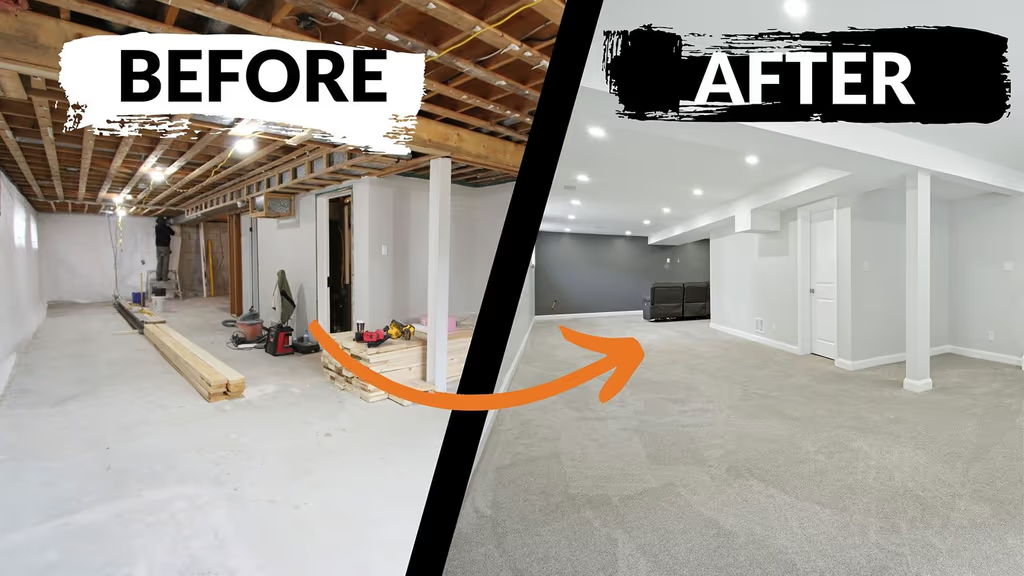
When Sandra and Josh contacted us through a referral, they were living in a cramped raised ranch in Simcoe with two young kids. The kitchen was jammed in the center with no flow. The basement was cold and dark. They had no backyard access despite being on a corner lot.
See Sandra describe their 4-month transformation
“We love how much space we have now. It’s exactly what we needed for our family to thrive. And the basement? It’s our favourite hangout spot.” – Sandra
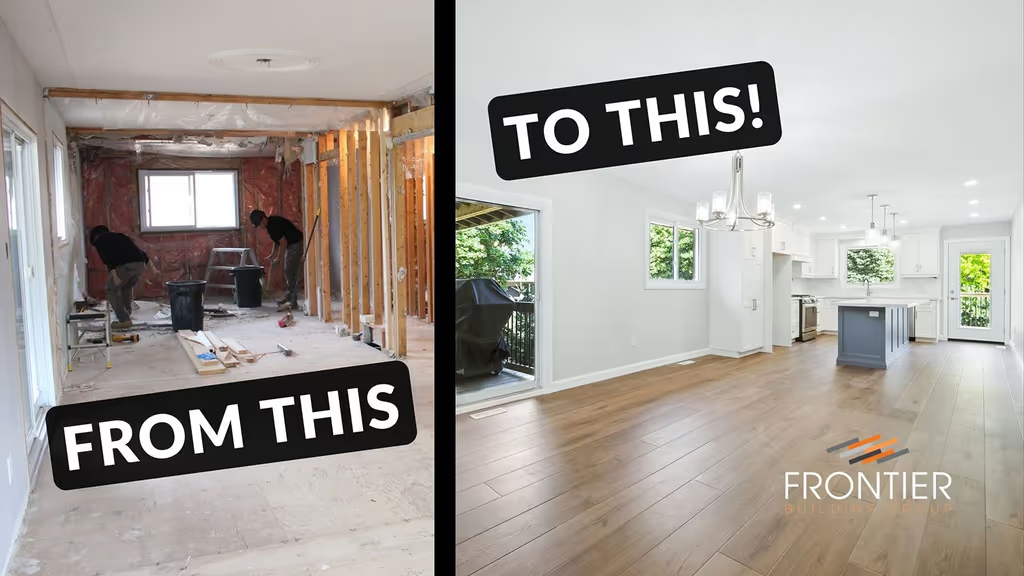
The project: 800 sq.ft. addition, full interior gut, kitchen relocation, primary suite creation, basement finish – completed in approximately 4 months. One contract. One team. No “messenger” role for Sandra and Josh.
Compare that to the traditional path: Months of design fees before knowing the real price. Bidding wars. Acting as translator between designer and contractor. Sandra and Josh avoided all of it.
Design Build vs Traditional Remodeling: The Decision Matrix
| What You Need | Design-Build | Traditional |
| Timeline | 44% less likely to run way over schedule | Linear sequence stretches for months |
| Budget certainty | Costs locked during design | Sticker shock after design complete |
| Your workload | One point of contact | You coordinate multiple parties |
| When problems hit | Team solves internally | You mediate disputes |
| Quality control | Built into collaboration | Inspected after errors occur |
Choose traditional if: You have 18 months to spare. You enjoy project management. You have trusted relationships with both an architect and contractor already.
Choose design-build if: You have a deadline. You want cost clarity early. You cannot spare hours chasing people. You want one neck to wring when things go wrong.
How to Spot a Real Design-Build Partner
Not every firm that claims “design-build” delivers. Here is what to look for.
Documented process. Vague promises mean vague results. Frontier’s 6-Step Framework lists specific deliverables at each checkpoint . Ask to see the roadmap.
Specific experience. “Years of experience” means nothing. Founded 2007, women-owned, family-operated, serving Brantford and Norfolk County for almost two decades means something.
Local knowledge. Your team must know the permit offices, the trade availability, the common quirks of local housing stock. We have processed permits across Brant, Norfolk, Haldimand, and Paris.
After-project care. The relationship should not end when the last tool leaves. Our After-Care and Support phase includes warranty coverage and check-ins after completion . That is when you learn if accountability was real or marketing.
Red flags: Pressure to decide immediately. Fuzzy process descriptions. Reluctance to discuss limitations. No local project specifics.
Your Next Move
You started reading because you want a renovation that works. Not a war story. Not a second job managing contractors.
Design build vs traditional contractors is not a style choice. It is a risk choice.
Traditional spreads risk across multiple parties. You coordinate. You absorb the gaps.
Design-build concentrates risk with one accountable team. You focus on your life. We focus on the build.
The right method depends on your timeline, your budget flexibility, and your appetite for project management. But for most homeowners facing a major renovation, the integrated approach wins on sanity alone.
If you are planning work in the next 6 to 12 months, evaluate firms against the criteria above. Look for process documentation, verified credentials, local expertise, and after-project accountability.
Then pick the team that makes you feel confident, not cautious.
The best renovation does not just transform your space. It gives you your life back while it happens.
Tell us about your project. We will walk you through how our 6-Step Framework applies to your specific situation-and whether design-build is the right fit for your timeline and goals.